
I have been thinking a lot recently about the difference between pain and suffering. Not in an abstract philosophical sense, but in the deeply ordinary moments of life where something feels hard, disappointing, slow, uncertain, or painful, and then something else happens almost immediately afterwards inside of us, which makes it all worse.
A difficult day arrives. The body feels heavier again after signs of progress. A setback happens in work or in life. Momentum dips. A conversation does not go the way you hoped. You notice yourself slipping into an old pattern you thought you had moved beyond. Something simply feels harder than it did yesterday.
That is the first experience.
But then comes the second drop. It’s the story the mind adds to the initial experience:
“This isn’t working.”
“I’m back at square one.”
“Why is this happening?”
“Maybe I’m not capable of this after all.”
“I was doing so well.”
I have been experiencing this very personally in recent weeks in the context of my own physical recovery. A few weeks ago, I met with my consultant and it became clear that the recovery in my right wrist is likely to take much longer than I had hoped or anticipated. We were suddenly talking in terms of anything up to two years. I left that appointment devastated. In my own language, I went into a real funk for about five days afterwards. I felt flat, discouraged, emotional, and overwhelmed by the reality of what I was hearing.
And if I am honest, what was difficult was not only the news itself. It was everything I started doing to myself in response to the news. The fear. The catastrophising. The feeling that life was suddenly on hold. The internal collapse that interpreted uncertainty as something bad.
Then this week I attended another consultation with occupational therapy. Again, I went in with lots of questions, hoping perhaps for more certainty or reassurance than they were able to give me. I came away feeling deflated and sad all over again. The reality had not changed very much.
But something in me had.
This time, I noticed the drop much sooner. I noticed the temptation to spiral into discouragement and hopelessness, to start layering fear and catastrophic meaning onto the situation. But instead of fully collapsing into it for days, I was able to catch myself much earlier.
Not by pretending I felt fine.
Not by forcing positivity.
Not by denying the sadness or disappointment.
But by recognising that there is a difference between pain and the suffering I create when I abandon myself inside the pain.

There is a teaching in Buddhist philosophy about the “two arrows.”
The first arrow is the unavoidable pain that comes with being human.
The second arrow is the suffering we create in response to that pain.
The first arrow may not always be within our control. The second one often is.
I think this dynamic shows up everywhere in our lives. I see it in clients who are trying to build something meaningful and encounter setbacks. Someone begins prioritising their wellbeing and then loses rhythm for a period of time and immediately concludes they have failed. Someone starts taking courageous steps toward a new career, receives a rejection, and begins questioning their entire path. Someone is healing emotionally or physically and interprets one difficult day as evidence that nothing is changing.
The difficult moment itself is often not what creates the deepest suffering. What creates suffering is the pressure, fear, shame, and hopelessness we begin layering on top of the difficult moment. We turn a hard day into a harsh one.
✨ I am learning that one of the most important questions I can ask myself in those moments is not, “How do I make this improve?” but rather, “What am I doing to myself right now in response to this moment?”
Am I adding fear to pain?
Pressure to disappointment?
Shame to struggle?
Am I withdrawing support from myself precisely when I need it most?
Compassion, I think, is often misunderstood as softness or indulgence. But perhaps compassion is actually the decision to remain on our own side when things are not going well. Perhaps it is the refusal to abandon ourselves simply because progress is slower, messier, or less visible than we would like.
This does not mean denying reality or pretending everything feels fine. It does not mean bypassing frustration, grief, disappointment, or exhaustion. It means meeting those experiences without layering unnecessary harm on top of them.
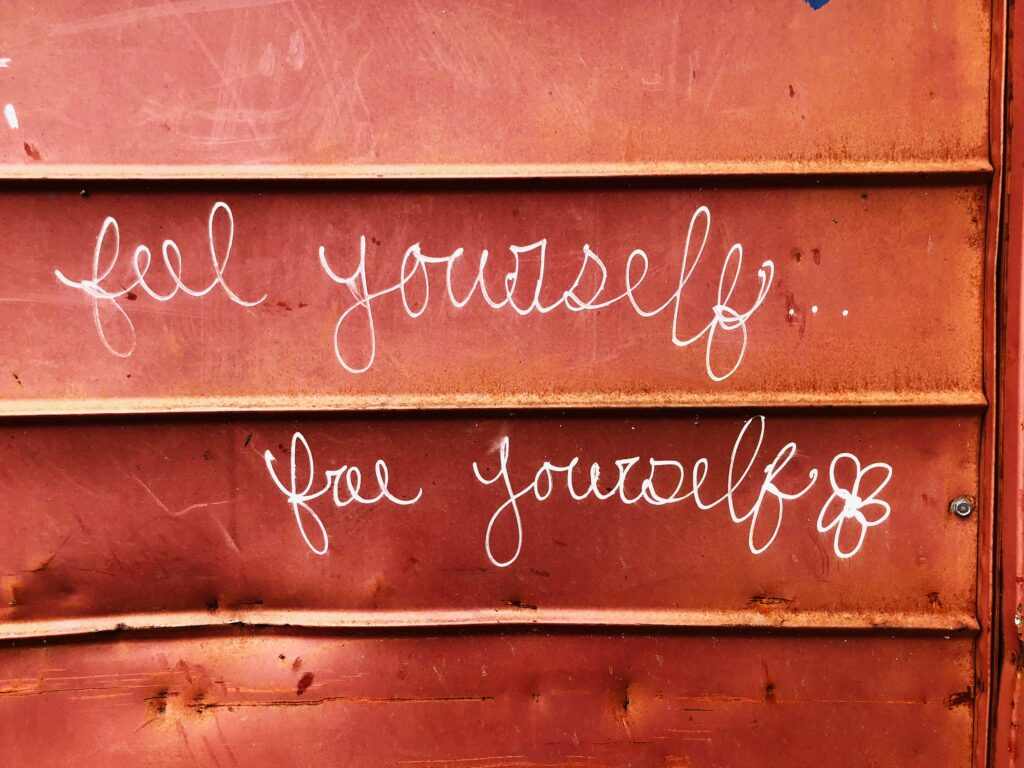
Sometimes support looks like rest instead of force. Sometimes it looks like adjusting expectations without giving up entirely. Sometimes it looks like asking for help, softening the internal dialogue, or allowing a difficult day to simply be a difficult day without assigning it catastrophic meaning.
Not every setback means I am failing. Not every difficult day means something has gone wrong. Sometimes it simply means that today requires a different kind of support.
So that’s what I’m learning to say to myself – “Nothing has gone wrong. Today just requires a different kind of support.” In such moments I’m choosing to stay on my own side, even when its hard and especially when it’s difficult.
A Gentle Reset in Difficult Moments
Part of the skill we are developing here is learning to notice the early signs that we are slipping into despondency before we are fully consumed by it. For me, those signs can include a tightening in my chest or jaw, feeling like I want to cry, a thought like ‘oh no…’ or ‘not again,’ or comparing today to yesterday.
You don’t need to stop everything. Just pause for a few seconds and say something like this:
“Okay… today feels hard.
Nothing has gone wrong.
Let me not add pressure to this.
What does my body need right now?”
As you say the words, you might also embody them by softening your shoulders and taking one slower breath, nothing dramatic, just enough to signal: “I’m safe, I’m adjusting.”
Then gently ask yourself what support is actually needed right now? Perhaps it is more rest. Perhaps it is reaching out to a supportive friend, mentor, or coach. Perhaps it is space, nourishment, movement, reassurance, or simply a little kindness toward yourself.

What I am discovering is that these small moments of interruption matter. The words acknowledge reality without denial, while gently interrupting the story that something catastrophic has happened. The body begins to learn that fluctuation is not danger. That difficult days do not require panic. And that support remains available even when disappointment is present.
💫 Perhaps the real transformation is not that difficult days disappear, but that we learn not to disappear from ourselves within them.
We learn to soften instead of hardening. To support instead of shaming. To stay present instead of catastrophising. And over time, those small moments of returning to ourselves begin to create something quietly powerful:
a steadier nervous system, a more compassionate inner world, and a deeper trust that even difficult days can be met well.
P.S. One of the things I’m learning again and again is that healing and transformation happen more sustainably when we are supported, not pressured. That spirit is at the heart of Soul Café, the monthly membership community I host for people who are longing for more steadiness, reflection, and compassionate growth in their lives.
If that speaks to where you are right now, you can learn more here. Use code Founder for best rates.